


Everything You Need to Know About Traveling to Cuba from USA- Travel Tips!
 I wish I had this blog before I visited Cuba with my friend Ryan earlier this month. We did a 7 day itinerary in Cuba, flying Frontier Airlines into Havana from Denver, Colorado.
Here’s everything you need to know about traveling to the culture-rich island of Cuba, just a 45 minute flight from Miami… yet world’s away. 🌎
I promise, you’ll HAVANA good time in Cuba!
VISA
 Yes, you need a travel visa (also called a tourist card) if you’re traveling to Cuba from America. However, I’m not 100% sure if residents from other countries are required. You can purchase your tourist card online here for about $110.
The alternative is to buy your tourist card at the airport in Miami or Orlando. It is my understanding that all flights to Cuba must stop in Florida first. We stopped in Miami and bought our tourist card at the American Airlines ticket counter check-in area for $100. (We were able to pay with credit card.)
*It’s worth noting that we had to exit the gate area and head to the lobby of the airport to get the visa at the American Airlines counter. In order to get back through security we had to stand in line at the Frontier counter to get a “gate pass”. Thankfully, we had enough time between flights (1.5 hrs) and catching our plane wasn’t an issue. You MAY also be able to get a visa at your airline’s gate- so it’s worth asking before you trek out into the airport lobby.
“REASON FOR TRAVELING” TO CUBA
As you may or may not know you must select a general license or “reason” for traveling to Cuba. This occurs when you purchase your flight and when you book ANY sleeping accommodations.
The 12 categories of authorized travel to Cuba are: family visits; official business of the U.S. government, foreign governments, and certain intergovernmental organizations; journalistic activity; professional research and professional meetings; educational activities; religious activities; public performances, clinics, workshops, athletic and other competitions, and exhibitions; support for the Cuban people; humanitarian projects; activities of private foundations or research or educational institutes; exportation, importation, or transmission of information or informational materials; and certain authorized export transactions.
We selected “support for the Cuban people” as our reason for visiting Cuba. Turned out no one ever questioned us about it or cared. They just wanted to know what our reason was.

MONEY
There are two types of money in Cuba. Because why make it easy?!
There is the Cuban Convertible Peso (called CUC) and the Cuban Peso. Thankfully, you don’t need to worry about both types of currency. You will deal solely with CUC (sounds like “cook”), which is what you’ll get when you exchange money.
The conversion is really close to $1 US dollar= 1 CUC. So that’s easy.
Ryan and I decided to get Euros out of our bank instead of US dollars, to exchange into CUC. We heard that this would be a better deal as exchanging US dollars comes with a 10% fee. But in the end after converting to Euro and then converting to CUC and then back to Euro and back to dollars I’m not sure it really made much difference. If I travel to Cuba again I’ll just exchange US dollars for CUC and not be bothered with an extra step.
We budgeted $100 cash per day for travel, and this did NOT include our sleeping accommodations. Credit cards do not work in Cuba and there are not many ATMs so we decided to bring all the money we would need in cash. We ended up having the perfect amount of money and used what we had left in the end for Duty Free gifts at the Cuban airport.
So where do you get this CUC? You can exchange up to $200 in the Cuban airport, so do that. You’ll need it for a taxi into town which is really the only option for getting into Havana. There ARE money exchange banks in Cuba, but an easier route is to just do it at a hotel (even if you’re not staying there just fake it).
Fun fact: In Cuba, alcohol is the same price as water.
LANGUAGE
You know what would be totally awesome? If I spoke Spanish.
Many Cubans DO NOT SPEAK ENGLISH. I would say having basic knowledge of Spanish is a must for traveling to Cuba. If you are very unfamiliar with the language, buy a translation book. Don’t rely on WIFI to translate for you, because WIFI is scarce. (We’ll get to that soon.)
Note that hotel staff at the major government-run hotels all speak fantastic English. 👍🏼
CITIES
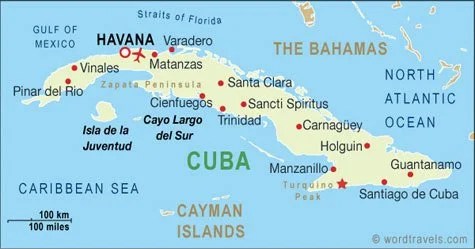
Havana– A must, must, must do in Cuba obviously. A vast city with tons of history, culture, live music, and art.
Varadero– The beach resort destination in Cuba. In my opinion, not a cultural representation of the country but nice if you’re looking for R&R.
Vinales– A mountain region in the western part of Cuba filled with cave tours, tobacco farms, coffee plantations, horseback riding, and more.
Trinidad– Rural yet colorful town in central Cuba filled with tradition and small town charm. Don’t forget to try their local cocktail, Canchanchara.
Other cities to consider– Camaguey, Cienfuegos, Santiago de Cuba.

SLEEPING
You’ve got some options here. And it depends on what type of trip you’re looking for. Ryan and I stayed in 2 different Airbnbs and 1 hotel, which we booked prior to our trip. Things fill up FAST so get on it at least a month ahead of time.
Casa Particulars
This is Cuba’s version of a Bed & Breakfast mixed with Airbnb. This is basically where you stay in a room at a Cuban’s home (with them) and they make you breakfast. You can book these online and they VERY cheap. ($30/ night)
AirBnb
Yup, there are TONS of Airbnb’s in Cuba. These seems to be just slightly more expensive than Casa Particular’s. ($50/ night) We stayed in two Airbnb’s and found that the hosts treated them similar to a bed and breakfast situation. They offered to come over in the morning to make the beds, cook us breakfast ($5 extra) and were on hand if we needed anything. In most places Airbnb hosts hand you the keys and leave you alone. Not in Cuba.
Hotels
All official hotels are government run. This is the nicest option you’ll find. There are extremely luxurious hotels in Central Havana and Old Havana. The rooms are not terribly expensive, from $130-$250/ night. If you’re looking for a comfortable vacation this is the way to go. We stayed at Hotel Plaza for two nights in Central Havana. While this location was STELLAR, the hotel was not (ants in the room, no AC in the lobby, etc). While I do NOT recommend our Hotel Plaza we did go into many others that seemed fantastic.

ITINERARY
This was our 8 day itinerary in Cuba:
Day 1– Flight lands, then travel to Trinidad
Flight lands in Havana, Cuba at 9:20am. Travel by Viazul bus ($25 CUC) to Trinidad. Took 7+ hours but was supposed to be 6 hours. Checked in to our Airbnb. Dinner at Lonely Planet recommendation La Ceiba.
Day 2– Explore Trinidad
Breakfast at Airbnb made by our host Tony. Walking tour of Trinidad that ended with coffee at the best shop in Trinidad, Cafe Don Pepe. Spent the afternoon at Trinidad’s beach resort Playa Ancon. Dinner at Vista Gourmet buffet. (Unique!)
Day 3– Explore Trinidad
Visited the Historical Museum and Architecture Museum followed by souvenir shopping at their street market. Taxi ride to waterfall hike- Salto del Carbini. An hour hike down to the waterfall and natural springs. (We did it in the pouring rain, so that was fun.) Dinner at rooftop restaurant Obbatala near Plaza Mayor, followed by a trip to Trinidad’s famous cave rave- Disco Ayala. (This place is freaking awesome.)

Day 4- Travel back to Havana
Instead of the Viazul bus, we arranged a Taxi to take us back to Havana for $30 CUC. But the car full with 5 passengers was bit to tight for my liking. Checked into our new Airbnb in Vedado (residential area of Havana). Highly recommend this Airbnb- huge, clean, safe -only downside was we had to take taxi’s into the main part of Havana.
Took a taxi to famous Coppelia Ice Cream in Central Havana. (Underwhelming… but five scoops of ice cream was .50! Make sure to stand in the “tourist” line on the sidewalk or you’ll get yelled at. Walked along the Malecon and then to National Hotel (super nice) for drinks on the outside patio.
 Day 5- Explore Havana
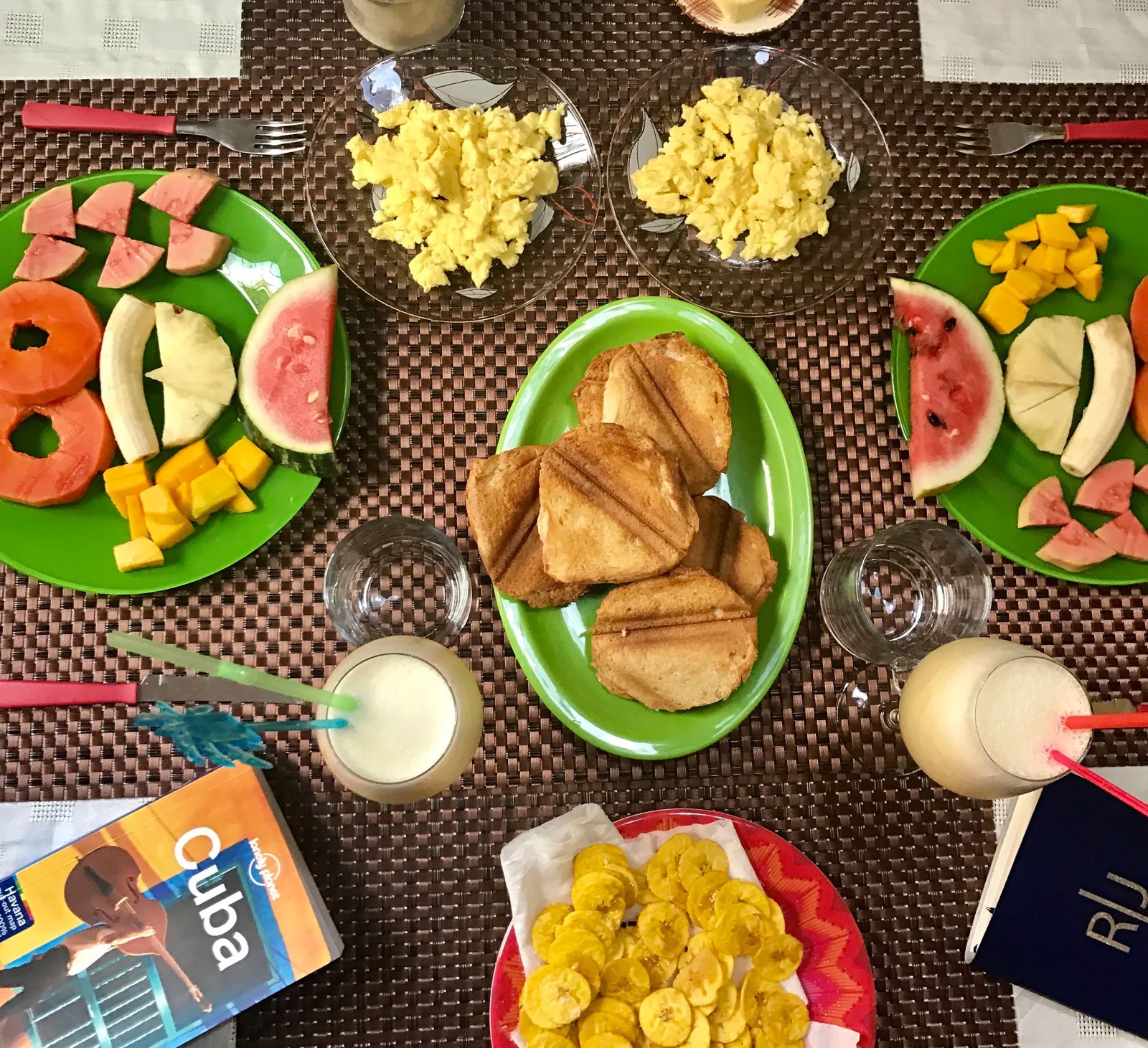
Breakfast made by our Airbnb host (also $5). Walking tour of Old Town Havana, ending in a beer at Factoria brewery (go there!) Walked to the Revolution Museum, followed by lunch at Cafe Bohemia (Bohemian cafes are a thing) in Playa Vieja. We had to try the Chocolate Museum, which is not actually a museum- just a chocolate shop.
Went to famous 1830 restaurant (back patio dancing!) and then to Fabrique del Arte a Cuba. The FAC is an awesome art gallery/ bar/ club/ food venue/ live show. An absolute must!
Day 6- Explore Havana
Walked by University of Havana, tried to go to Napoleon Museum (closed for Holiday), and trekked to the Revolution Plaza. We left our Airbnb and checked into Plaza Hotel in Central Havana (turned out to be a fantastic location). From our hotel we arranged a retro convertible tour for $35/hour. In hindsight I would have arranged it directly with one of the many drivers who sit in Parque Centro for much cheaper. Our tour took us past the Capital building, along the Malecon (ocean boardwalk), then into Vedado, Miramar, some crazy National Park where they sacrifice chickens, past tons of embassies, past Chinatown with no Chinese people (their favorite joke) and then back into Central Havana.
We had a late lunch at Hotel Inglaterra and that night went to the famous Hemingway haunt, Floridita. It was a bit too touristy but had incredible live music.
Day 7- Day trip from Havana to Vinales.
A tour guide picked us up at our hotel and escorted us in a taxi to Vinales. A 2.5 hour drive. We first stopped at a cave (Cuevas del Indio) and took a boat ride INSIDE the  cave, then to lunch at Paladar La Pimienta (the best traditional Cuban meal we had!), and then to Rancho Allegri tobacco farm. The tobacco farm tour was fantastic, and we got to try the organic cigars (and buy them!). From there you can take a horseback ride to a coffee plantation where you see how they make coffee beans.
Finally we stopped at Mural de la Prehistoria- a famous mountainside painting that depicts the evolution of the planet.
Day 8- Flight from Havana back home
TRANSPORTATION
It’s not great. There are not many modes of transportation available in Cuba. Taxis are by far the easiest to come by and to arrange. They are also the most expensive. Going couple miles in Havana could run you $10. They definitely upcharge tourists and mind youCubans are not very keen on negotiating. So just pay it.
The other option is the Viazul bus system. In theory, it’s fantastic. They have high-end air conditioned buses that can take you to different cities across Cuba. In reality, the tickets are hard to get. Lines are long at the bus station, the website is unreliable, and there are no automated kiosks. Tickets are made by staff members that DO NOT speak English.
You can also rent a car but I gathered they were somewhat expensive. Instead, you CAN hire a taxi to drive you long distances for a somewhat reasonable amount.

ACTIVITIES
Food: Make sure to eat lots of lobster, try their traditional beef (SO GOOD), their delicious bean & rice combo, and fried plantains. Oh yes, and drink lots of rum.
Live music: Cuba is known for their vast live music scene. Do it. But it won’t be hard, almost every restaurant in Havana features live music. And it’s fantastic. 🎶
More: I listed the activities we did in my “ITINERARY” section.

BATHROOMS
You’ll find a wide variety of public and private bathroom situations. Many public restrooms require you to pay for entry. Usually $.25-$.50 cents. Sometimes they suggested the payment amount, and sometimes I just gave them what I wanted. Moral of the story: carry change around with you.
Also BRING your own toilet paper. Many bathrooms do not have any. Yes, I carried toilet paper in my purse everywhere I went. 🚽
SAFTEY
 I’ll admit initially I was a bit worried about safety in Cuba, as a female American. But I felt totally safe the entire trip. At the FAC Ryan and I saw an American tourist from Maine pull a money belt out of his shirt and we laughed.
Cubans are not aggressive. They are extremely friendly and willing to help tourists. And they really don’t have a choice- tourists are everywhere! But obviously, take natural precautions and you’ll be fine.
WIFI
Sooooo we didn’t find this out until the end of our trip. To get WIFI available at hotels, some restaurants, and other random places you must purchase a WIFI card. It’s a piece of paper with a login and password on it and gets you an hour of service. It’s about $6 CUC. Buy as many as you want. Go nuts.
CUSTOMS
We arrived in Havana in the morning and there was ZERO wait to go through customs. We had no problem with the “reason” we were visiting, or with our actual visa.
However, while waiting for our luggage at the carousel we were interrogated by more than one airport official asking a million questions about why we were visiting Cuba (where we are staying, our occupation, etc). It turned out to be nothing except them doing their job but it was definitely uncomfortable.
On the exit, same thing. No lines at all to go through customs and it was very painless. The hardest part was trying to understand what the clerks were saying because my Spanish is no bueno.

In summary, I found Cuba to be a colorful cultural experience and a trip I would recommend to ANYONE.
Did you find this blog helpful? Tell me below!
And if you have any questions about traveling to Cuba feel free to reach out: MistyKingma@me.com